RZ67II vs Mamiya 7: Measuring Camera Vibration
Originally posted on Instagram. Notes from the repair bench, kept here as a searchable archive. View the original on Instagram
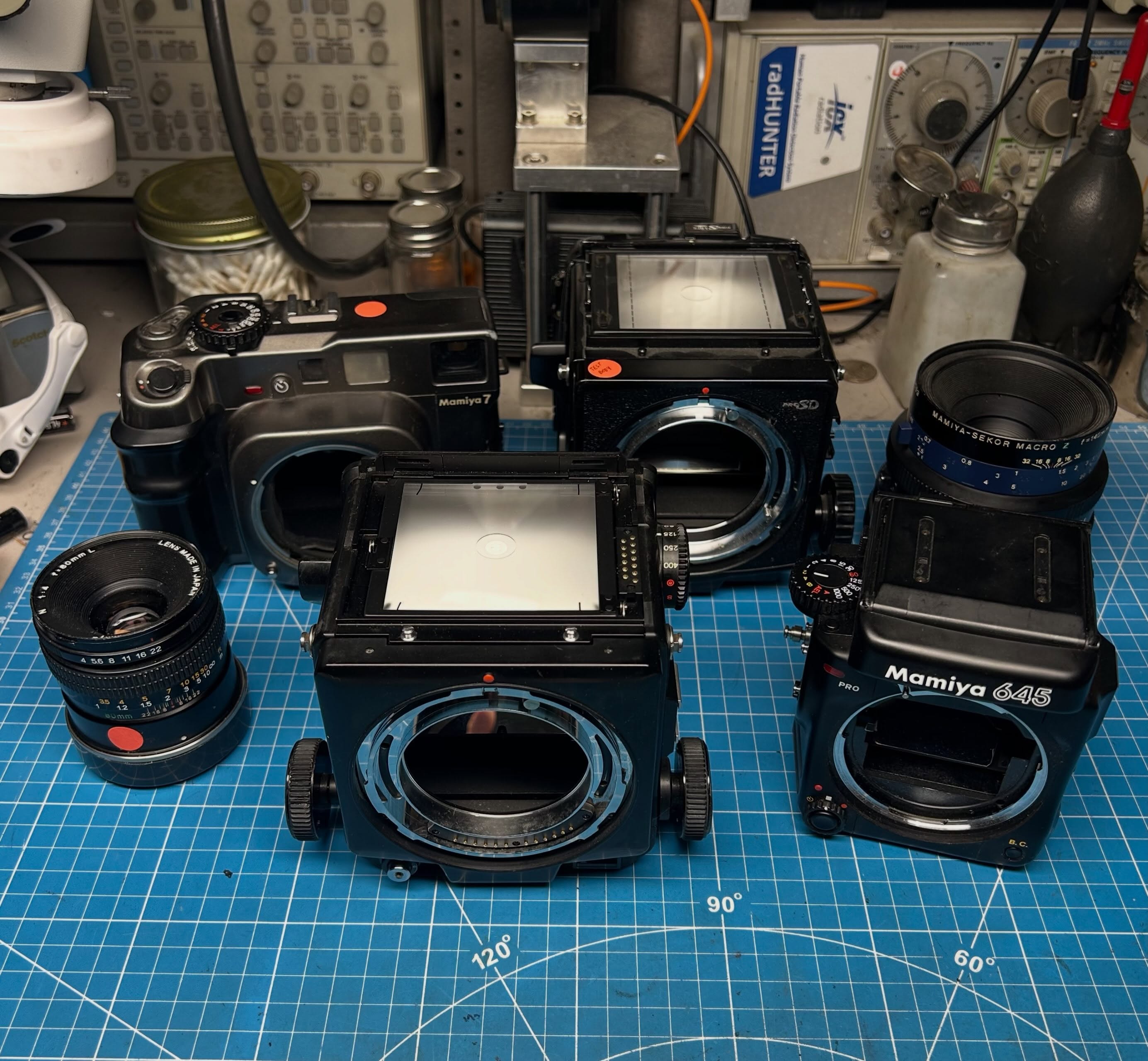
This is a post about vibration analysis. I happen to have these two cameras on the bench (Mamiya RZ67II and Mamiya7) right now so thought it would be a good time to test the amount of vibration each of them generate. This, of course, can be an important value when shooting at slow shutter speeds.
Now, this is actually not a fair test as the Mamiya is an electro/mechanical SLR and has a mirror slapping up in the body and the Mamiya 7 is an electronically controlled camera with no mirror. So I realize it is a bit of a ridiculous comparison! But it is late in the day and I wanted to finish with something a little interesting.
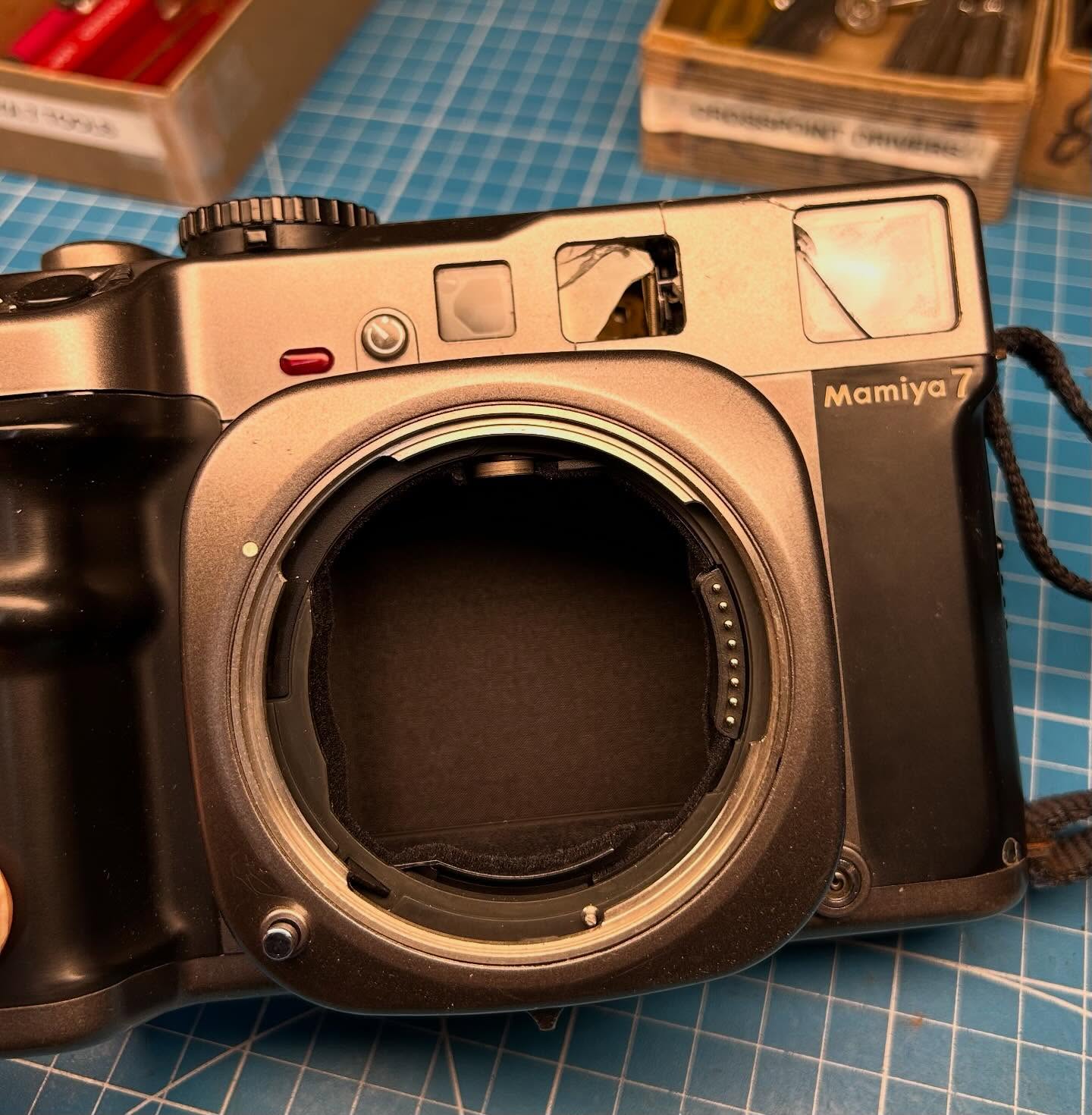
Photo two shows the setup that I use for measuring vibration on the Mamiya RZII w/127mm K/L lens (this is an all mechanical lens being used in mechanical setting on the RZII). I have attached a Bruel & Kjer 4370 Accelerometer to the tripod socket. Same with photo three and the Mamiya 7 w/65mm lens/ Light reading is taken through the back of each camera with a photodiode. The output of these sensors is fed to two channels of an oscilloscope. Shutter speed is set on 1/30 second and the cameras are hand held.
Photo four shows the output from the Mamiya RZII. Channel one on the bottom is the vibration sensor and channel two on top is the light sensor. You can see how the mirror adds a lot of initial vibration and this continues a little through the time the shutter is open.
Photo five is the output of the Mamiya 7 and the most vibration is happening after the shutter blades closes.
Tripods are not always the answer to vibration issues as a tripod too small can create its own vibrations. A technique that has been recommended in the past is to use a tripod but hold the camera to dampen vibrations.